

It is natural to forget things from time to time. It’s why people keep reminders on their phones and sticky notes on their refrigerators. Memory loss may become more common as people age, but it is often normal. So, how can aging adults tell if they are experiencing dementia symptoms? And how do they know when it’s time to seek medical attention?
Home care is trained to help seniors with daily reminders and living on their own. Many seniors want to age in place, but it can be difficult to forget things. Although this is a sign of dementia, forgetting things is also just part of aging. When it becomes an everyday thing or becomes dangerous for a senior, they should seek medical attention.
You can use some signs to tell if it is average forgetfulness or dementia. They may seem the same, but they are not. When a senior has dementia, home care can help take the pressure off of the senior. It is important to have professional help from your parents when you are too busy taking care of your own family. Here are some signs that a senior may forget, and others may indicate dementia.
Normal Symptoms of Aging
There are a few things that are normal for seniors to experience as they age.
Absentmindedness
Absentmindedness is similar in that it relates to the focus of your brain. For example, you may forget an appointment simply because you were not preoccupied with the thought of it. This could be a good thing, because it indicates that the brain is clearing out old memories to make room for new ones.
Mental Illness and Forgetfulness
People suffering from depression are sometimes misdiagnosed as having dementia symptoms. According to the institute, one reason for this could be that a person suffering from depression may be preoccupied with the source of their sadness and anxiety. Constantly worrying about or obsessing over a recent tragedy can cause forgetfulness about other subjects.
Signs of Dementia
One of the only ways to get diagnosed with dementia is by seeing a doctor regularly. There are also stages of dementia, and seniors may not be diagnosed properly. Here are some potential signs of dementia.
Seniors Forget Important Things
Dementia symptoms extend beyond simply forgetting where an object is or when an appointment was scheduled. Symptoms include forgetting the names of close friends and loved ones and an inability to recall certain words. When an elderly person exhibits these symptoms of extreme forgetfulness, it’s a good idea to make an appointment with a doctor.
Seniors May Experience Personality Changes
A senior in the middle stages of this disease may experience increased aggressive behavior, paranoia, or impulsiveness. This is frequently the most challenging aspect of the disease for caregivers. According to the association, it is normal for senior caregivers to be stressed out by these symptoms.
Becoming Disoriented
Another common dementia symptom is the tendency to become disoriented in new situations. When an older adult with dementia moves to a new location, the unfamiliar stimuli may cause anxiety. When seniors with dementia are disoriented, they may appear lost to onlookers and become easily irritated with their home care providers.
Source
https://alzheimer.ca/en/about-dementia/do-i-have-dementia/differences-between-normal-aging-dementia












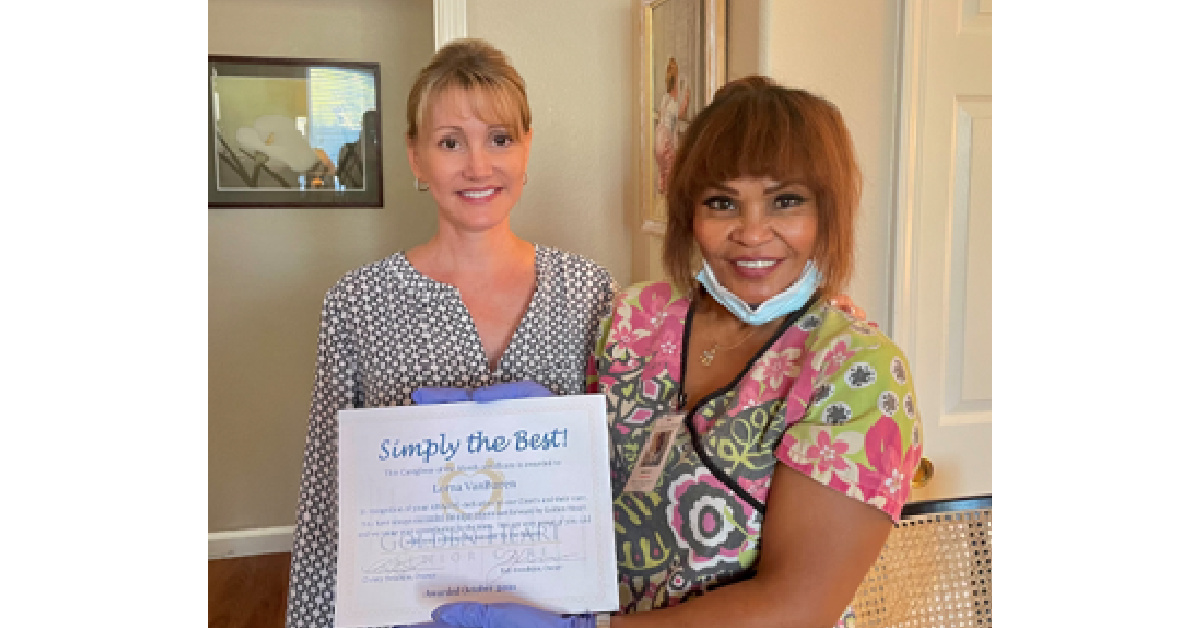
 Our valued Golden Heart Caregiver, Lorna, has been recognized as our October Caregiver of the Month! Lorna migrated to the United States from the Philippines in 1980 and received her citizenship in 1996. Lorna enjoys fitness in her free-time and deep-sea fishing, and a hidden talent of hers is playing guitar! Lorna says that her biggest inspiration for being a caregiver, among many other things, is the true value of life. Her favorite thing about in-home care is building bonds with her clients; including the unconditional trust that’s formed, the smile they give when they look forward to seeing her, or holding her hand to let her know they need her. Lorna’s best memory on the job is when she went on a walk with her client, and they both had so much fun talking and laughing that neither one realized it was past time for Lorna to go! The two shared a good laugh after that. Lorna’s five year goal is to become a trainer and teacher for other caregivers. She says she would love to be able to share her knowledge to help other caregivers be efficient and successful in this field. Lorna is proud of her self-love, and her ability to “embrace the good, resist the bad, and let go of the ugly” that she’s developed over years of learning. We are proud of her, too! We are lucky to have passionate caregivers like Lorna on our team. Congrats, Lorna!